Not long ago, many restaurant owners dismissed delivery as impractical — or even a risk to their brand. Who wanted carefully made lattes or freshly prepared meals bouncing around on a motorbike? Then customer behaviour changed. Off-premise dining grew from a convenience into an expectation, and delivery stopped being an afterthought.
But the shift revealed something more interesting than survival: done right, delivery is a genuine growth channel for restaurants, cafes, and quick service operators. This article explains the Marginal Cup framework — the idea that adding one more beverage to a delivery order can meaningfully improve profitability — and what operators need to make it work reliably.
The conventional view is that delivery adds costs: platform commissions, packaging, driver fees, and the operational complexity of running a parallel service. Those costs are real. But they obscure a more important point about marginal revenue.
When a restaurant is already staffed, stocked, and operating, the incremental cost of fulfilling one more delivery order is low. The kitchen is already running. The barista is already on shift. The fixed costs are already covered. Every additional beverage sold through delivery — that Marginal Cup — contributes revenue against very little incremental cost.
This is the core insight behind the ROAM framework (Return on Additional Margin): measuring whether delivery genuinely improves productivity by looking at what each additional sale contributes after variable costs, not just whether total revenue increases.
Beverages are one of the highest-margin items on any restaurant or cafe menu. A cup of coffee, an iced tea, or a specialty soft drink carries a significantly higher margin than most food items. Yet beverages are also one of the most underdeveloped categories in delivery menus.
The reason is usually one of two things:
This is the delivery beverage gap: the difference between the beverages a business could confidently offer for delivery and the beverages it currently does. Closing that gap is where significant untapped margin sits.
Prepared beverages are uniquely vulnerable during delivery. Standard cup lids are designed for dine-in or walk-out use — not for the repeated tilting, stacking, and movement that occurs during courier transport. Common failure points include:
Each of these failures has a direct commercial cost: a refund request, a replacement order, a negative review, or a customer who simply does not reorder. The beverage is often the visible failure point for the entire delivery.
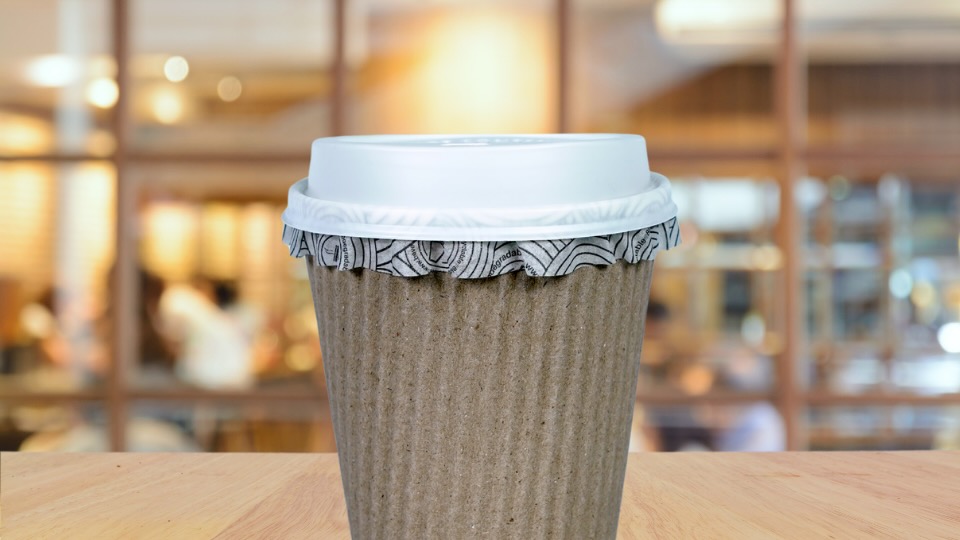
Addressing the delivery beverage gap requires packaging that is actually designed for the journey, not just for handoff. Spill-resistant, tamper-evident beverage packaging — such as a sealed insert placed between the cup and lid — adds a secondary layer of protection that helps reduce leaks at the lid interface and provides customers with visible evidence that their drink was sealed after preparation.
For operators, this has three practical effects:
Beverage Seal's patented insert is placed between the cup and lid, requires no equipment or machinery, and is suitable for both hot and cold drinks. It is certified food-safe, recyclable, compostable, and biodegradable. Learn more about spill-resistant beverage packaging for delivery.
The delivery opportunity is not limited to large chains. From global brands like Starbucks and major QSR networks to independent specialty coffee shops and local burger joints, the pattern is consistent: operators who treat delivery as a designed channel — rather than an improvised one — see better outcomes.
What distinguishes the operators who do it well:
Before expanding a delivery beverage programme, operators should review the following:
The Marginal Cup is the idea that adding one more beverage to a delivery order generates revenue against very low incremental cost, because the kitchen, staff, and fixed costs are already in place. Each additional cup sold through delivery contributes to profitability in a way that is disproportionate to its apparent size.
The most effective approach combines packaging designed for delivery conditions with operational discipline. Spill-resistant inserts placed between the cup and lid help reduce leaks at the most common failure point. Delivery bags with dedicated cup holders or compartments reduce tipping. Standardising packing procedures across staff reduces variability.
Standard cup lids are designed for dine-in or walk-out use, not for the repeated movement of courier transport. Leaks typically occur at the cup-lid interface when the lid flexes under tilting or braking. Condensation on cold drinks can also reduce lid grip. Hot drinks are vulnerable to pressure build-up as steam forms inside the cup.
Tamper-evident beverage packaging gives delivery customers visible confirmation that their drink was sealed after preparation and has not been interfered with during transport. A tamper-evident insert placed between the cup and lid is visible when the customer receives the order, providing reassurance before they take the first sip.
It can be, when measured correctly. The key is using a contribution margin or ROAM (Return on Additional Margin) framework that accounts for the incremental cost of each delivery order against the revenue it generates. For businesses with existing staff and kitchen capacity, the marginal cost of fulfilling delivery orders is often lower than operators expect, particularly when high-margin beverages are included.
Beverage Seal helps restaurants, cafes, and QSRs deliver takeaway drinks with greater protection against spills and tampering. The patented insert is simple to apply, requires no equipment, and is in active use across global markets including the USA, UK, Canada, and South Africa. Request a sample or speak to the team to see how spill-resistant beverage packaging fits into your delivery operation.
→ Contact us: hello@beverageseal.com